The Complete Bra Guide: Find Your Size & Perfect Fit

Fitting 101

Words Alicia Miller

Updated August 26th, 2026

Between sizing that varies by brand, a confusing alphabet of cup letters, and the nagging sense that what you own is never quite right, buying a bra can sometimes feel like a puzzle. It's easy to give up and keep wearing the same one that almost works. Whether shopping online or trying on in the fitting room, this is a common problem that most women have faced - and we are here to help.We will walk you through the full journey: from measuring yourself accurately at home, to diagnosing fit problems you may not have noticed, understanding which fabrics will keep you comfortable all day, to finding the right style for your bust type. Using our collective experience through thousands of bra fittings, we've developed this comprehensive bra guide to help you find your size and fit, and that you can reference again and again.

Step One: Measure Accurately

Something heard constantly in the fitting room: "I have been this size for years."

And we get it — once you find something that mostly works, it's easy to stick with it. But bodies change — after weight fluctuations, pregnancy, hormonal shifts, and even just aging. Your size today is probably not your size from five years ago, and that is completely normal.

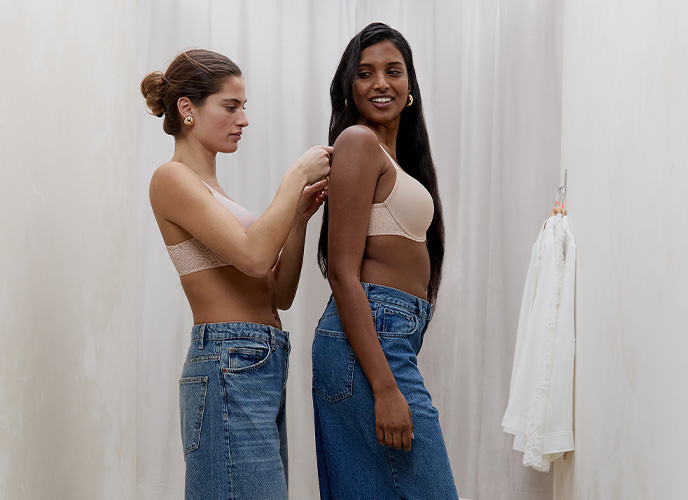
Because every body is different, an in-store fitting with a trained specialist is always the most reliable starting point. Use our store locator to find a retail partner or specialty store near you that offers fitting services.

If that is not an option, our Band & Cup Measuring Guide walks you through the full process with an interactive size calculator.

The Complete Bra Guide - Measure Accurately

Step Two: Check Your Current Bra's Fit

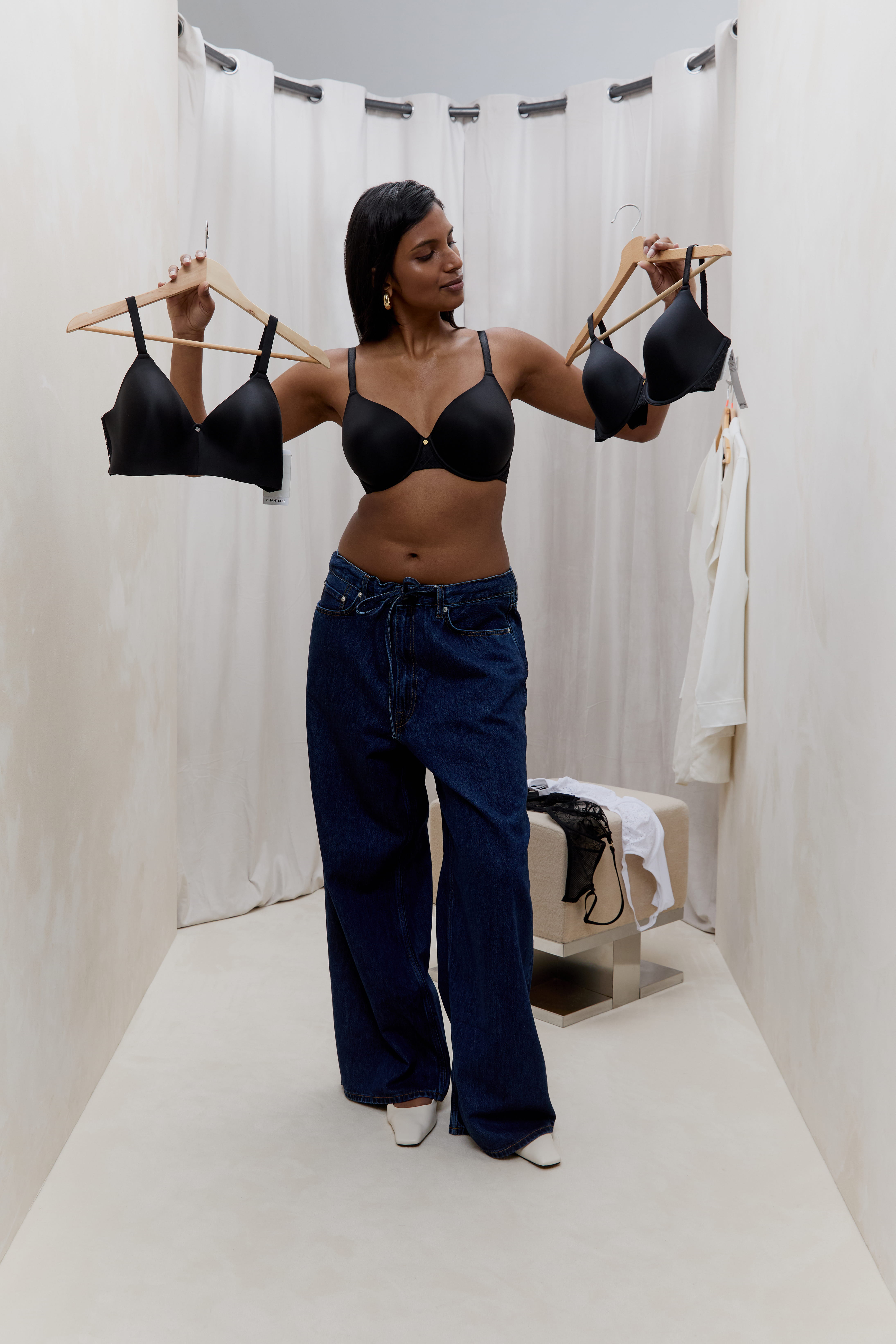
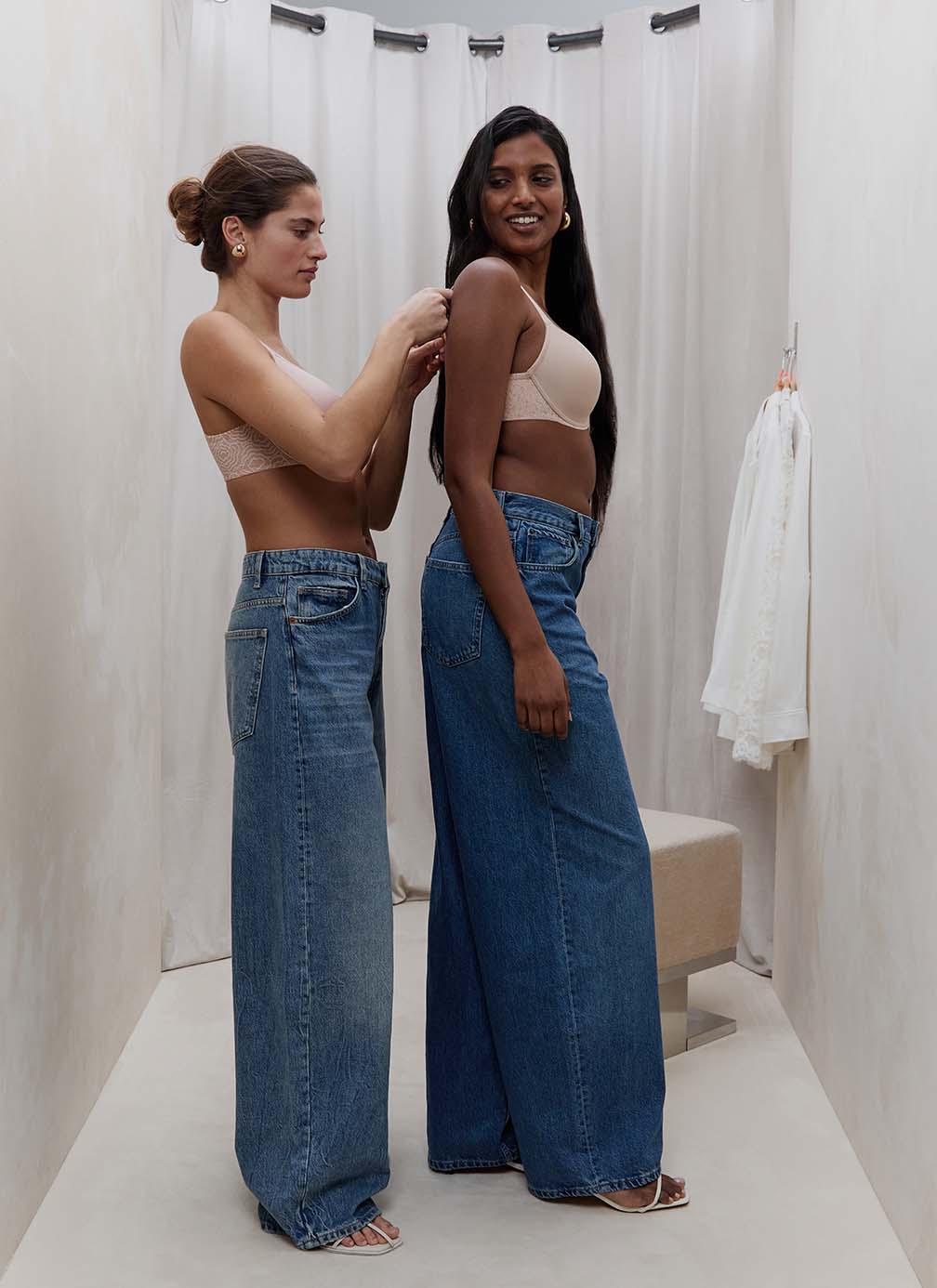
Before buying anything new, grab a bra you already own and put it on. Assessing what works, or doesn't, about your current bra is exactly what we do in the fitting room — and once you know what to look for, you will not be able to unsee it.

The band should lie straight and low across your back, not ride up toward your shoulder blades. You should be able to fit one finger underneath it — not two, not three. If you can fit your whole fist under there, we need to talk. If the band is riding up, it is too large, even if the cup feels right.

The cups should lie flat against your chest with no gaping or spillage at the top, sides, or into your underarm. If you are spilling out, the cup is too small. If the fabric wrinkles or puckers, the cup is too large.

The underwire (if present) should sit against your ribcage and wrap around the breast tissue, not rest on top of it. The center gore — the small bridge between the cups — should sit flush against your sternum.

The straps should be snug but not digging in. If you are relying on your straps for support rather than your band, your band is too large.

Common Fit Problems and What They Mean

  • Band riding up the back: Band too large. Try a smaller band size with a larger cup to maintain the same cup volume (sister sizing).

  • Straps digging into shoulders: Band too loose. The band should provide the support, not the straps.

  • Straps falling off shoulders: If the straps are too long, adjust the sliders. If you have narrow or sloped shoulders, look for styles with more centered straps or a leotard back.

  • Cups cutting in at top: Cup too small. Go up one cup size.

  • Cups gaping at top: Cup too large. Go down one cup size.

  • Spillage at underarm: Cup too small, or the cup shape is not right for your breast tissue.

  • Underwire digging at the side: Cup too small. The wire is not enclosing all of your breast tissue.

For a deeper walk-through of each of these scenarios, see our Expert Fit Checklist.
Step Three: Understand Sister Sizing

Bra sizing is not one-dimensional. The cup letter is meaningless without the band — a 34D and a 36C hold the same cup volume. These are called sister sizes.

If a 34D feels right in the cup but the band is too tight, try a 36C before dismissing the style. If the band fits but you are spilling out of the cup, a 34E (DD) will give you more cup room with the same band snugness.

Think of bra shopping like shoe shopping or jean shopping — every brand runs a little differently, and within a brand, different styles can fit differently too. Construction changes everything. You might be a 34D in a T-shirt bra and find you need a 34E (DD) in a plunge style to get the same containment, because the cup shape opens up differently. That is not a sizing problem; that is just how the style is built. Your size is a starting point, not a fixed answer.

Step Four: Consider the Material

The Complete Bra Guide - Consider the Materials

Material matters most when it is doing a specific job. Rather than thinking about fabrics in the abstract, it helps to connect each material choice to what you are actually wearing and why.

  • Memory Foam Cups work similarly to a memory foam mattress — they use your body heat to soften and contour to your exact shape over time, creating a smooth, personalized silhouette that is unique to you. They are the defining feature of a lot of our T-shirt bras — if you want something that disappears under a fitted top, memory foam cups are an easy choice.

  • Spacer Knit Fabric is worth knowing about if breathability is a priority for you. It is a lightweight, three-dimensional fabric with a built-in cushion of moving air — think of it as the material equivalent of a breathable running shoe. It is used as a lining or outer layer in unlined and lightly lined bras, and it is one of the best options for everyday comfort without added bulk.

  • Spacer Foam Cups take that same airy construction and heat-mold it into a permanent, rounded cup shape — giving you the smooth silhouette of a traditional foam cup without the heat retention. If you run hot — whether that is climate, hormonal changes, or just how your body works — this is a style type worth knowing about. You get the same smooth, contoured shape as a memory foam cup, but in a material that actively breathes. Spacer foam cups are most commonly found in contour and T-shirt bras.

  • Power Mesh is a firm, structured netting used in bra construction for support and containment. It typically appears in the wings, side panels, or lining of more supportive styles. It holds its shape, resists stretching, and moves with the body without giving way over time.

  • Elastane is the stretch component woven into almost every modern bra fabric. It provides recovery — the ability of the material to return to its original shape after wearing. The proportion of elastane in a fabric affects how it moves, how well it holds its structure across the day, and how the bra wears over time.

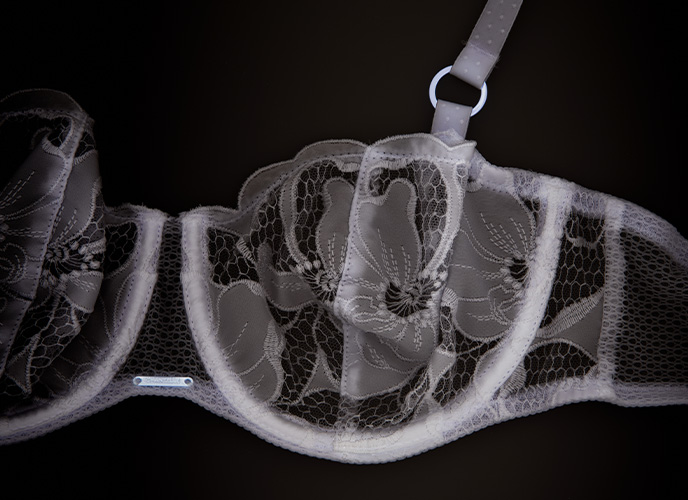
  • Lace is often assumed to mean decorative and fragile, but that depends entirely on the construction. Many lace fabrics are soft, not scratchy, and with enough structure that an unlined lace cup relies on its seaming to shape and support rather than on a foam or mesh lining. Unlined lace bras are not simply sheer styles; they are a distinct structural choice that provides real support through their construction.

The more delicate end of the lace spectrum is Leavers lace — a traditional needle loom lace with a finer, more intricate structure. Within the Chantelle range, Leavers lace appears primarily in Chantelle X, our statement line that stands out for its boldly elevated pieces.

The Complete Bra Guide - Match Style To Your Bust Shape Needs

Correct size and comfortable material get you most of the way there. The right style closes the gap.

Fit is also personal in ways that sizing alone cannot predict. Where you carry your breast tissue — fuller on top, fuller at the bottom, set wide apart or close together — affects which cup shapes and styles work best for you. Two women wearing the same size can end up in completely different styles because their tissue sits differently. Use the sections below as a starting point — take what works for your body and go from there.

For a Full Bust (DD cup and above)

Full-bust fit is its own conversation — and honestly, one that does not get had enough. If you have spent years settling for bras that almost work, you are not alone. With more breast tissue to support and contain, the structural details matter a lot more: cup shape, underwire gauge, strap placement, and band construction can make the difference between a bra you wear every day and one that stays in the drawer.


Popular for a Full Bust:

  • Seamed cups provide lift and shaping that molded cups often cannot sustain in larger cup sizes. A seam distributes the breast tissue and maintains the cup's shape over time.

  • Centered straps keep the cups in place and shape the fit — the band is what provides the support. If your straps are digging in, look to the band first.

  • A firm band — the band should do the majority of the support work. If you are relying on your straps, something is off with the band.

  • Full coverage cups if containment is the priority. Side slings and wings that extend further under the arm can also prevent side spillage.

Minimizers are worth mentioning here: they do not actually make the bust smaller, but they redistribute breast tissue to create a smoother, lower-projection silhouette under fitted tops and button-downs. They are one of the most practical wardrobe tools for DD+ cups.

For a full guide to full-bust shopping — including wireless options, minimizers, and strapless solutions — see our Real-World Guide to Full-Bust Bra Shopping.

For curated style recommendations in DD+ sizes, see our DD+ Favorite Styles.

For Everyday Wear

The Complete Bra Guide - For Everyday Wear

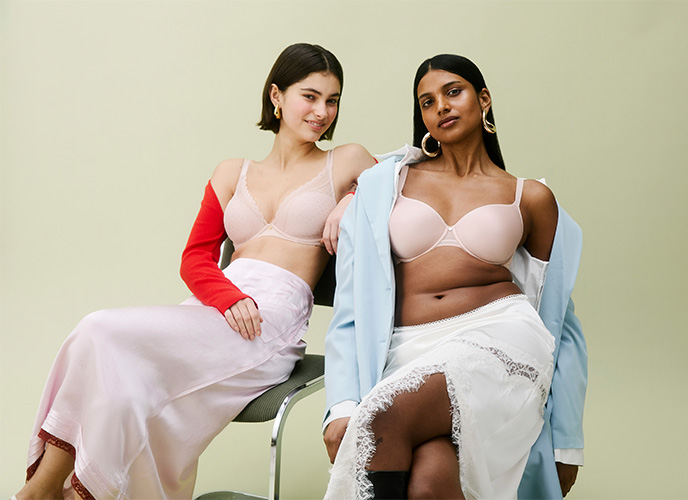
The ideal everyday bra is the one you reach for without thinking — the one you own in multiple colors because it is just that good. When your favorite is in the wash and you have to make do with something else, you feel the difference. That is the bra you are looking for.

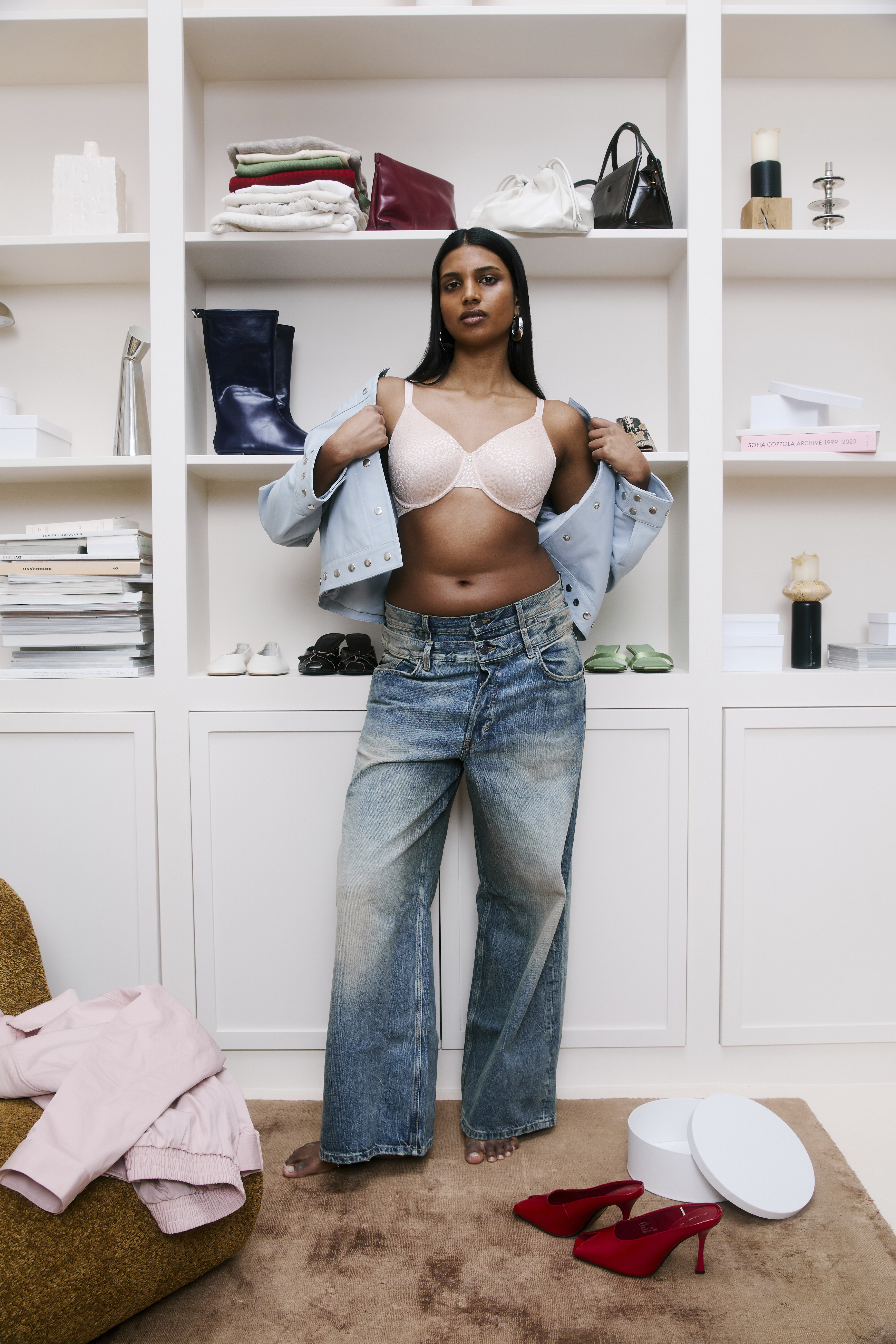
What that looks like is personal. For some, it is a smooth T-shirt bra with memory foam or spacer foam cups that disappear under everything. For others, it is a hybrid style with internal seams for lift and a lace overlay that looks just as polished under a fitted top without the bulk. There is no single right answer — the best everyday bra is the one that works for your body and your wardrobe.

A few things to look for regardless of style: a band that stays put without digging, cups that hold their shape throughout the day, and enough hook-and-eye positions to adjust as the bra relaxes over time. Start on the loosest hook and work inward.

Wireless bras are also worth considering for everyday wear. As innovation in wireless support has evolved over the years, they can now offer meaningful support across a wider range of sizes than they used to.

A few of our fitter favorites for everyday wear:

  • Norah Comfort Underwire Bra — a hybrid style with internal seams for lift and support and a flat lace overlay that works beautifully under fitted tops.

  • C Jolie T-Shirt Bra — a smooth, seamless classic with memory foam cups for a clean silhouette under anything.

  • Magique Wireless Bra — a wire-free option with back-smoothing support for those who want all-day comfort without sacrificing shape.
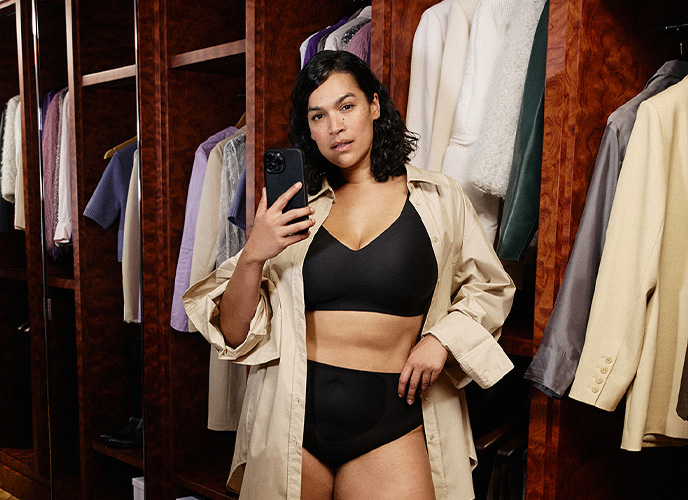
For Working From Home

The Complete Bra Guide - Work From Home

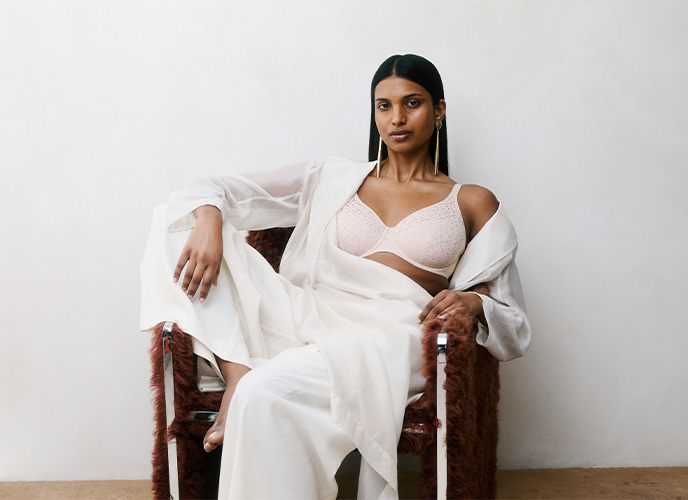
Working from home is an opportunity to wear styles you might not reach for on an office day — something you can genuinely lounge in, but that still makes you feel put together when that virtual meeting begins.

This is also a good moment to explore styles that are sized differently. Not everything in your bra drawer has to run in a band and cup size. Bralettes — sized in small, medium, and large rather than band and cup — offer more flexibility in how they fit and can be more than enough for a desk day.

Look for styles with enough structure to feel intentional — not just a sports bra — but soft enough that you forget you are wearing one by the end of the day.

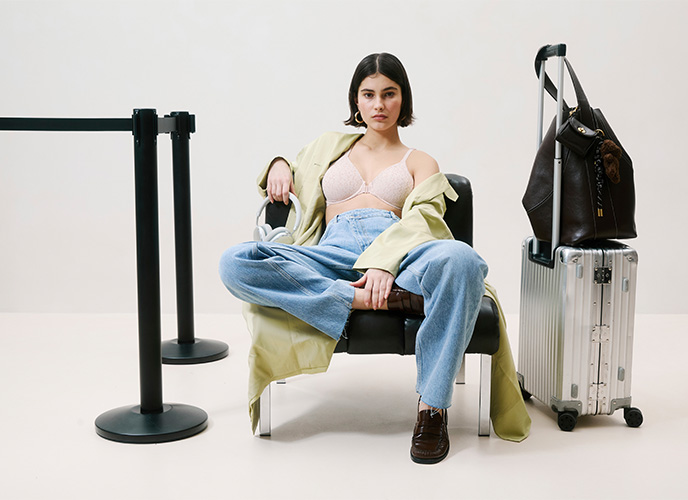
For Travel

The Complete Bra Guide - For Travel

The priority when packing is versatility — fewer bras that do more. A wireless bra is a practical starting point: comfortable enough for long travel days, easy to pack flat, and polished enough to wear out.

A front closure bra is worth considering for the same reasons. Easy to take on and off, and for unlined styles, it takes up minimal suitcase space without sacrificing a put-together look.

Convertible styles with multiway straps extend your options further — one bra can work across multiple outfits, which means fewer bras in your bag. The Norah Front Closure Bra is a good example of this thinking in practice: it is unlined so it packs flat, the front closure makes it simple to get on and off, and the built-in J-hook lets you convert to a racerback when a tank or fitted top calls for it.


How Often to Get Re-Fitted

Most bra fitters recommend reassessing your fit annually, or after any significant body change — weight fluctuation of more than 10 pounds, pregnancy, breastfeeding, or changes to medication. A bra that fit perfectly 18 months ago may not fit the same body today.

Bras themselves also have a lifespan. With regular wear and proper care, most bras last 6–12 months before the elastic begins to lose its recovery. If your band has stretched to the last hook and still feels loose, the bra has done its job — it is time to replace it.

For professional in-person fitting, our store locator lists retail partners and specialty stores that carry Chantelle products — each with their own fitting services. For a guided online fitting, start with our Bra & Underwear Fit Guide.


You Now Know More Than Most

Many women go their whole lives wearing the wrong size and never know it. You have just spent time getting to know your body, your fit, and what to look for — and that can change everything about how you shop.

If you still have questions, we are here. Chat with us directly on the site, or reach out to our fit experts at fitexpert.usa@groupechantelle.com — there is no question too small, and we genuinely love this stuff.

A better fitting bra is closer than you think.